People counter comparison · Updated July 2026

Best People Counters for Retail (2026)

A side-by-side comparison of the top 9 foot-traffic sensors, scored on accuracy, install effort, privacy, POS integration, and total cost of ownership.

Our verdict

Dor is the best people counter for most retailers (1 to 1000+ stores): thermal sensing (no customer images), five-minute install, POS integrations, and transparent pricing at $150 per month per location. Enterprise rollouts ship in weeks (vs. months for RetailNext/ShopperTrak). High-ticket showrooms should also consider TraxSales; offices should evaluate Density.

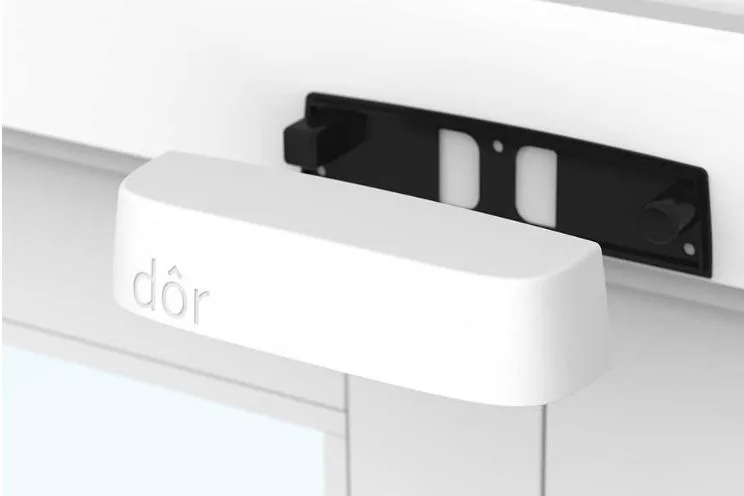
Dor thermal people counter mounted above a store door, with no cameras and no images
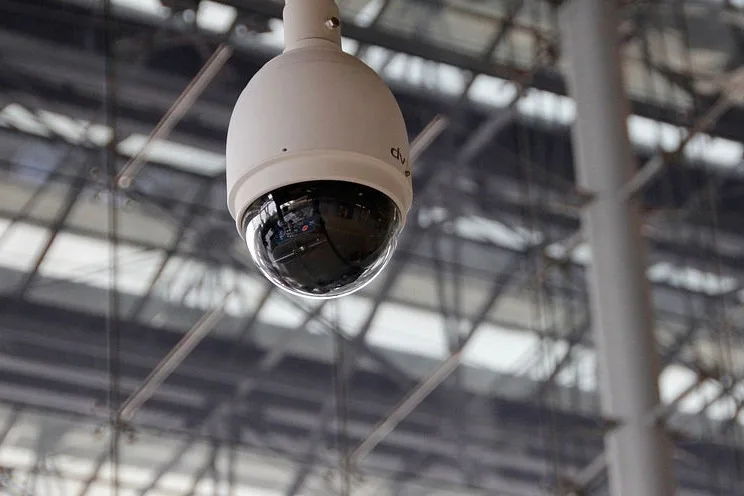
A traditional dome-style video-camera people counter, the alternative Dor replaces

How do you rank people counters?

Every vendor below is scored on the six factors that decide whether the data gets used day-to-day:

  1. Counting accuracy in real store conditions.
  2. Install effort: minutes, hours, or a scheduled electrician visit.
  3. Privacy: image capture and applicable GDPR/CCPA obligations.
  4. POS / e-commerce integrations: native connections vs. custom projects.
  5. Total cost: hardware, software, install, and contract over a 3-year horizon.
  6. Best-fit retailer size: single-store boutique through enterprise chains.

Why aren't accuracy percentages listed? Every vendor advertises "95%+" or higher, but methodologies vary: door type, traffic volume, group-entry handling, and bidirectional logic all move the number. If accuracy is decision-critical, ask each vendor for their test conditions and pilot two systems side by side in your own store.

The best people counters for retail in 2026

Scroll horizontally to see all columns →

#VendorTechnologyInstallBest forPrice
1 DorThermal, battery, cellular by default5 min, peel-and-stickAll retailers (1–1000+ stores)$$
2 RetailNext3D stereo vision + deep learning (Aurora)Pro install, hoursEnterprise mall-anchor stores$$$$
3 ShopperTrak (Sensormatic)Stereo visionPro install, hoursEnterprise chains$$$$
4 V-Count3D active stereo vision + AIPro installMid-market to enterprise$$$
5 FootfallCam3D stereo, thermal, Wi-FiPro installMid-market$$$
6 SenSource3D stereo vision + AI (Vea)Pro installMid-market (US)$$$
7 Traf-SysOverhead 3D / video (wired) or wireless beam (Direct Count One)Pro install (wireless model available)Small to mid-market, libraries$$
8 DensityDepth sensor / radarPro install, ceiling mountWorkplace / corporate; secondary retail fit$$$$
9 TraxSales VisualProofAI video + photo capturePro install (~1 hr)Furniture / jewelry / high-ticket showrooms$$$

What each vendor is actually good at

2

RetailNext

Enterprise Smart Store platform

Technology: Aurora sensor: 3D stereo vision fused with deep learning for on-device analytics; part of a full retail-operations suite.

Legacy enterprise platform: Aurora combines 3D imagery and deep learning for traffic, shopper-journey analytics, and loss prevention. Fits 500+ store chains with retail-technology staff to manage a fleet-wide PoE install.

The draw is breadth: one sensor fleet feeds traffic counting, in-store journey paths, queue management, and loss-prevention video from a single dashboard, which is why RetailNext anchors so many enterprise RFPs. Expect enterprise economics to match: quote-based pricing that typically lands at $5,000+ per door, multi-year terms, and a rollout program rather than an out-of-box install.

Trade-offs: pro install at every door, multi-year contract, recorded video imagery, and an implementation timeline measured in months.

Best for: Enterprise chains that need the full Smart Store stack and have in-house retail IT resources.

RetailNext Full comparison: Dor vs RetailNext →
3

ShopperTrak (Sensormatic)

The category incumbent

Technology: Camera-based stereo vision, part of the broader Sensormatic IQ platform.

Category creator, now part of Sensormatic Solutions (Johnson Controls). Strong in mall and big-box, a natural fit alongside existing Sensormatic EAS or RFID. Same trade-offs as RetailNext: cameras, multi-year contracts, and a capex install.

Its unique asset is benchmark data: ShopperTrak aggregates traffic from tens of thousands of monitored entrances worldwide, so large chains can compare their own footfall against market and mall indexes, something no smaller vendor can replicate. If your board asks "is traffic down for everyone, or just us?", this is the vendor whose data answers it.

Best for: Enterprise chains consolidating anti-theft, RFID, and traffic analytics under one vendor.

ShopperTrak Full comparison: Dor vs ShopperTrak →
4

V-Count

3D stereo vision with anonymous demographic estimation

Technology: Nano AI: 3D Active Stereo Vision with on-device AI for age and gender estimation. Depth data processed anonymously; marketed as GDPR-compliant.

Demographic data is the headline feature, for when the question is "who is walking in?", not just "how many?" Depth data is processed locally without capturing faces, though demographic estimation typically still requires a customer-facing privacy notice.

Plan for a real installation project: sensors are PoE-powered and ceiling-mounted, so each door needs a 2–4 hour professional install plus a network drop. Pricing is published as prepaid annual or two-year subscriptions and sits between budget thermal counters and the enterprise incumbents ($$$ in our table), which makes V-Count the usual shortlist pick when demographics are required but a RetailNext-scale contract is not.

Best for: Mid-market chains (10–200 stores) that need demographic data and accept a 2–4 hour install per door.

V-Count Full comparison: Dor vs V-Count →
5

FootfallCam

Broad sensor catalog for mixed use cases

Technology: Broad sensor lineup: 3D stereo vision, thermal, Wi-Fi, and queue analytics.

The most diverse hardware catalog on this list: door counting plus queue length and dwell-time heatmaps from one vendor. Multiple sensor types mean multiple install profiles, and the software UI trails newer entrants.

Budgeting is more transparent than most rivals: hardware per counter plus an annual software subscription, positioned mid-market ($$$ in our table). The catch is that queue and dwell analytics need additional sensors beyond the door counter itself, so a "full analytics" store can end up with three or four devices where a pure traffic count needs one.

Best for: Mid-market retailers that need queue or dwell-time analytics alongside counting, with IT capacity for multiple sensor types.

FootfallCam
6

SenSource

US-based mid-market with the Vea analytics platform

Technology: 3D stereo vision sensors paired with the Vea analytics platform. Based in Youngstown, Ohio; founded in 2002.

Long US presence and an established support team, with stereo-vision hardware layered with AI. Pricing and contracts run more enterprise than the website suggests, and native POS integrations are thinner than the incumbents.

The Vea platform layers dashboards, scheduled reports, occupancy alerts, and multi-site comparisons on top of the sensor fleet, and US-based phone support is a genuine differentiator against overseas rivals. Best evaluated when domestic support and a single accountable vendor matter more than a broad integration ecosystem.

Best for: Mid-market US retailers that want one vendor across mixed store sizes and can commit to pro installs.

SenSource
7

Traf-Sys

Dependable hardware for smaller retailers and libraries

Technology: Overhead sensors (Eclipse and Spectrum 3D, both wired) alongside Direct Count One, a wireless, battery-powered beam counter with ~1 year battery life and a 16 ft IR range.

A broad hardware catalog for retailers, libraries, museums, universities, and casinos. Wired overhead counters run on the VisiCount platform; Direct Count One covers entrances where network cable is impractical. Pricing is quote-based.

The trade-off for the approachable price point ($$ in our table) is analytics depth: VisiCount covers counts, period comparisons, and scheduled reports, but there is no native POS integration and no conversion-rate view: fine for a library gate count, limiting for a retailer managing staff against traffic.

Best for: Small to mid-sized organizations that want dependable counting hardware without a full analytics platform, especially libraries and non-retail venues.

Traf-Sys
8

Density

Workplace-led occupancy, secondary retail fit

Technology: Ceiling-mounted depth sensor, plus a 2025 Open Area radar product. Anonymous-at-source: no cameras, no images.

Sub-second occupancy data with anonymized depth-mapping, built for offices, gyms, and conference spaces where real-time headcount matters. Density sells into retail, but pricing and dashboards are tuned for facilities teams: no native retail POS integration and no store-level conversion-rate view.

Pricing is a per-space subscription sized for corporate real-estate budgets ($$$$ in our table) rather than per-door retail economics. If the job is proving how much office space a company actually uses, Density is arguably the category leader; that is simply a different job than retail conversion.

Best for: Office, gym, and corporate occupancy management; secondary fit for retailers focused on real-time capacity rather than conversion.

Density
9

TraxSales VisualProof

Photo verification and salesperson accountability

Technology: AI video with time-stamped photo capture of every entry, paired with a salesperson rotation ("UP") system. Vendor cites a 15% revenue lift in 90 days and a ~1-hour install.

Sales-floor accountability is the differentiator: every entry is photo-verified and the UP system records who greeted whom. Photo capture of customers triggers GDPR/CCPA notice obligations, a non-starter for many apparel, grocery, and convenience brands.

Pricing is quote-based and pitched on payback: in a showroom where one associate can swing a $5K+ ticket, a single recovered sale covers the system, and the vendor cites a 15% revenue lift within 90 days (its own case data, not an independent audit). The ~1-hour install is the fastest of the camera-based options here.

Best for: Retailers where one associate can swing a large ticket (furniture, jewelry, high-end automotive, mattress showrooms) and a photo-capture privacy notice is acceptable.

TraxSales

Feature comparison

Two tables to keep the columns readable: the most-shortlisted vendors for general retail first, then specialty and regional options. Dor appears in both as the baseline, including the rows where competitors win.

Most-shortlisted for general retail

Scroll horizontally to see all columns →

FeatureDorRetailNextShopperTrakV-CountTraxSales
Install 5 min self-install2–4 hrs pro2–4 hrs pro2–4 hrs pro~1 hr pro
Time to first data Same dayAfter scheduled installAfter scheduled installAfter scheduled installAfter scheduled install
Power & connectivity Battery; cellular or Wi-FiWired (PoE)WiredWired (PoE)Wired
Image capture None (thermal)3D videoStereo videoDepth, no facesPhoto + video
Native POS integrations Shopify, Square, Vend / LightspeedCustom projectCustom projectCustom projectCustom project
Demographic estimation
Shopper-journey analytics Partial
Queue & dwell-time analytics
Market benchmark data
Photo verification of entries Partial
Best for store count 1–1000+100+100+10+10+
Contract None requiredMulti-yearMulti-yearOften requiredRequired

Specialty and regional options

Scroll horizontally to see all columns →

FeatureDorFootfallCamSenSourceTraf-SysDensity
Install 5 min self-install2–4 hrs pro2–4 hrs pro~1 hr (wireless) / 2–4 hrs (wired)2–4 hrs pro
Time to first data Same dayAfter scheduled installAfter scheduled installAfter scheduled installAfter scheduled install
Power & connectivity Battery; cellular or Wi-FiWired (most models)Wired (PoE)Battery (Direct Count One) or wiredWired (PoE)
Image capture None (thermal)Varies by sensorStereo videoNone (beam) / video (overhead)Depth only
Native POS integrations Shopify, Square, Vend / Lightspeed
Queue & dwell-time analytics
Real-time occupancy
Demographic estimation Partial
Best for store count 1–1000+10+10+1+n/a (workplace)
Contract None requiredOftenOftenOftenRequired

See Dor in your store today

You've seen the comparison. Dor is the counter you can have counting this week: peel-and-stick install, thermal privacy, native POS integrations, and no multi-year contract.

Ready to buy? Complete your purchase in just minutes.

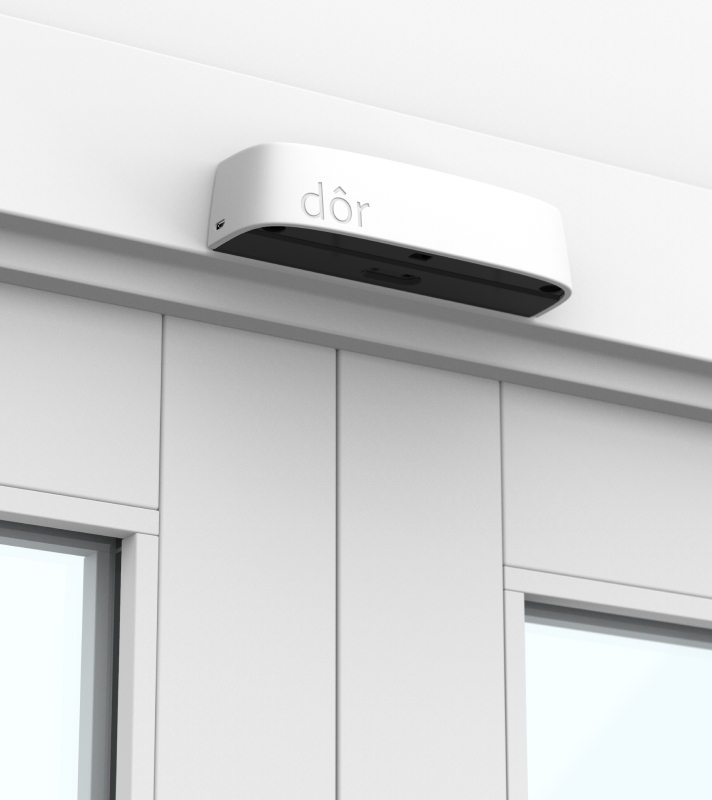
Dor thermal people counter mounted above a store door, with no cameras and no images

How to choose a people counter?

  • Want to install quickly and get conversion rate this week, regardless of fleet size?

    Dor — scales from 1 to 1000+ stores with rollouts measured in weeks.

  • Already have an existing RetailNext/ShopperTrak contract with multi-year terms?

    Run Dor as a pilot in 5–10 stores to benchmark speed and cost, then scale as contracts renew.

  • Selling furniture, jewelry, or anything where a single rep moves a $5K+ ticket?

    TraxSales VisualProof.

  • Measuring office or gym occupancy, not retail conversion?

    Density.

  • Specifically need on-doorway demographic estimation and accept a camera install?

    V-Count or RetailNext.

Frequently asked questions

1

What is the most accurate people counter for retail?

In real store conditions, every credible vendor (Dor, RetailNext, ShopperTrak, V-Count, FootfallCam, SenSource) performs in roughly the same range; published differences usually come down to test setup (door type, traffic volume, group-entry logic). Vendors advertising "99.9%" rarely publish methodology. Optimize for install model, integrations, and total cost; on accuracy, ask for test conditions and pilot two sensors side by side in your own store.

2

Are thermal people counters as accurate as camera-based ones?

On a standard storefront doorway, thermal counters like Dor perform in the same range as stereo-vision and AI-video counters from the same buying tier. Thermal trades demographic estimation for faster install, lower cost, and a privacy posture that does not require a customer-data review. Thermal sensors detect body heat rather than images, so they are unaffected by lighting changes, shadows, and window displays that can confuse video analytics; the main constraint is doorway width, where very wide or double-door entrances may need a second sensor.
3

What is the best people counter for a small retail business?

For small retailers (1-10 stores), the best people counter is one you can install yourself and connect to your POS without IT help. Dor fits that profile: peel-and-stick install in five minutes, native Shopify and Square integrations, and month-to-month pricing at $150 per location. Camera-based options like RetailNext and ShopperTrak require professional installation and multi-year contracts, which makes economic sense at 50+ stores but not at single-store scale.

4

Do I need a people counter if I already have a security camera?

A security camera is not a people counter. Retrofitting a camera with people-counting software generally underperforms a purpose-built counter: fine for spotting trends, not reliable enough for conversion-rate math at the hourly level. A dedicated counter is the difference between "we got busy on Saturday" and "our 2pm staffing is off by one associate." The gap shows up in the edge cases that decide accuracy: groups entering together, children, carts, and people lingering in the doorway. Purpose-built counters handle these with dedicated directional logic; retrofitted security cameras usually do not.

5

How much does a retail people counter cost?

Budget vendors, including Dor, start in the low hundreds per door per year all-in. Mid-market 3D and stereo-vision systems run roughly $1,500–$3,000 per door installed, plus annual software. Enterprise platforms like RetailNext and ShopperTrak typically start at $5,000+ per door with multi-year contracts. Dor is a flat $150 per location per month ($135 billed annually) with a one-time $300 hardware cost per sensor, and every feature included. When comparing quotes, price the full three-year picture (hardware, software subscription, installation labor, and any required network or electrical work), because the sensor sticker price is usually the smallest component of total cost.

6

What are the best alternatives to RetailNext and ShopperTrak?

For retailers of any size seeking faster deployment, the strongest alternatives are Dor (thermal sensing, five-minute self-install, $150 per location per month with a one-time $300 hardware cost per sensor, enterprise rollouts in weeks not months), V-Count (camera-based with demographics, published subscription pricing), and FootfallCam (broad feature set at mid-market pricing). The right alternative depends on what you are replacing: if you need demographics and shopper journeys, stay camera-based; if you need conversion rate with rapid enterprise deployment and no cameras or contracts, Dor is the faster path. See our head-to-head comparisons: <a href="/compare/dor-vs-retailnext">Dor vs RetailNext</a> and <a href="/compare/dor-vs-shoppertrak">Dor vs ShopperTrak</a>.

7

Can a people counter integrate with my POS?

It depends on the vendor. Dor has native integrations with Shopify, Square, and Vend / Lightspeed, so conversion rate is computed automatically once the POS is connected. Most enterprise vendors require a custom integration project to do the same. When evaluating vendors, ask specifically whether the integration is native (connect accounts and data flows automatically) or a "supported integration" that turns out to be a CSV export or a paid professional-services project.

8

Will a people counter record images of my customers?

Only if it uses a camera. Thermal counters like Dor do not. AI-video and stereo-vision counters like RetailNext, ShopperTrak, and V-Count do, which is fine for many retailers, but it triggers GDPR/CCPA review and customer-notice obligations. Decide before you install, not after. GDPR and CCPA obligations are triggered by capturing identifiable images, not by counting itself; in practice that means posted notices at the entrance, data-retention policies, and legal review. Ask camera-based vendors for their compliance documentation before installing.

9

What is the difference between a door counter and a people counter?

Same product, different name. "Door counter" emphasizes the install location; "people counter" emphasizes what is being measured. Some vendors also say "footfall counter" or "visitor counter." All refer to the same category. The distinction matters mostly while shopping: searches for "door counter" skew toward simple beam devices, while "people counter" surfaces everything from beam counters to AI vision systems. Whatever the label, evaluate the same six factors: accuracy, install effort, privacy, integrations, total cost, and retailer fit.

10

Can I install a people counter myself?

With Dor, yes: peel-and-stick install in about five minutes, no electrician and no network drop. Every other vendor on this list requires a professional install, and most need a wired power or network connection. The partial exception is Traf-Sys Direct Count One, which is wireless and battery-powered but still needs careful placement and a receiver. If self-install matters, confirm the details before buying: "wireless" in this category often means wireless data with wired power.

Empower your business today

Grow your retail business by understanding your in-store traffic, peak hours, conversion rates and marketing effectiveness.