Dor vs V-Count · Updated July 2026

Dor vs V-Count: A Side-by-Side Comparison for Retailers

V-Count is a visitor-analytics vendor whose headline feature is in-sensor age and gender estimation, backed by the BoostBI platform. Dor is a thermal people counter with a conversion-rate dashboard, no cameras of any kind, and a five-minute self-install.

Quick answer: Pick Dor if you want conversion rate without cameras. It uses thermal sensing, installs in about five minutes, bills month-to-month, and connects to Shopify, Square, and Lightspeed.

Pick V-Count if you need age and gender data or queue and occupancy tracking, and can ceiling-mount a wired sensor at each door.

At-a-glance comparison

Scroll horizontally to see all columns →

Dor V-Count
Sensor type Thermal — no camera, no images, no facial processing Ultima AI: 3D stereo vision with momentary facial analysis for demographics (deleted instantly, per V-Count); Nano AI: depth-based, on-device AI1
Install model Peel-and-stick, self-install in about 5 minutes Ceiling-mount; Ethernet with PoE injector / splitter (sold separately) or USB-C power; sensor activated by email to V-Count or a reseller2
Connectivity Cellular by default; Wi-Fi supported but not required Wired Ethernet (100BaseT); needs the site’s internet to reach V-Count servers2
Software platform Dor dashboard (cloud): traffic, conversion, heatmaps BoostBI web + mobile: traffic, conversion, occupancy, queue and zone analytics, REST API, 19 languages3
Demographic estimation None — by design Gender and age recognition in-sensor — the headline feature4
POS / e-commerce integrations Only people counter in Shopify’s certified app program; native Square and Vend / Lightspeed integrations "Shopify & POS integrations" listed with all subscription plans5
Privacy posture No customer images captured, ever Marketed GDPR-compliant: Ultima sensors momentarily process facial data for demographics then delete it; Nano AI analyzes depth data on-device1
Pricing Published: $150/location/month ($135 billed annually) + $300 one-time per sensor; no long-term contract required Published: $50/sensor/month billed annually ($600/yr) or $37.50/month billed every 2 years ($900), sensor included5
Typical customer Single-store boutiques through mid-market chains (1–500 stores) 600+ customers including 11 Fortune 500 companies, across 130+ countries; mid-market to enterprise6
Company Independent, retail-focused Founded 2006; London HQ with offices in Amsterdam, Miami, Dubai, Kuala Lumpur, and Ankara6

Methodology. No vendor paid for placement. V-Count facts come from public V-Count product pages, pricing, install guides, and privacy materials. Numbered references link to sources in the footer. We update this page when V-Count ships material changes or a reader flags an error.

The case for V-Count

V-Count was founded in 2006 and works out of London, with offices in Amsterdam, Miami, Dubai, Kuala Lumpur, and Ankara. It serves 600+ customers in 130+ countries, including 11 Fortune 500 companies. Two things set it apart: age and gender estimation in the sensor, and published pricing (rare among camera-based vendors, and worth crediting).

The demographic analysis product estimates visitor age and gender alongside the counts, and the BoostBI platform adds occupancy, queue, and zone analytics with a REST API. It can even take in data from other brands’ sensors. V-Count is a strong shortlist pick if you:

  • need to know who is walking in — the age and gender mix — not just how many,
  • want occupancy, queue, or zone data beyond a door count,
  • operate internationally and want a dashboard in 19 languages, and
  • have the IT capacity for a ceiling-mounted, wired install at each entrance.

V-Count also publishes its own comparisons against the big incumbents — a sign it competes on being open, not opaque.

When Dor is the better fit

Dor makes one product: a thermal people counter with a clear conversion-rate dashboard a store manager can install without IT. That trade-off works for you when:

  • You want zero facial processing at any point. Dor’s thermal sensor never captures an image. V-Count’s Ultima sensors briefly process facial data for demographics before deleting it, per V-Count’s own privacy materials. Even done well, that needs a legal review.
  • You can’t ceiling-mount a sensor and run wiring or arrange Power over Ethernet at every doorway. V-Count’s installation guide covers PoE injectors, splitters, and cable testing; Dor is peel-and-stick with cellular built in.
  • Your store’s internet is unreliable or locked down. Dor works out of the box on cellular; V-Count sensors need the site’s network to reach V-Count servers.
  • You want month-to-month billing. V-Count’s advertised rates require prepaying one or two years; Dor doesn’t require a long-term commitment.
  • You’re on Shopify and want the certified route: Dor is the only people counter in Shopify’s certified app program and is sold in the Shopify hardware store, with native Square and Vend / Lightspeed integrations too.

Where each tool wins

Install

Dor

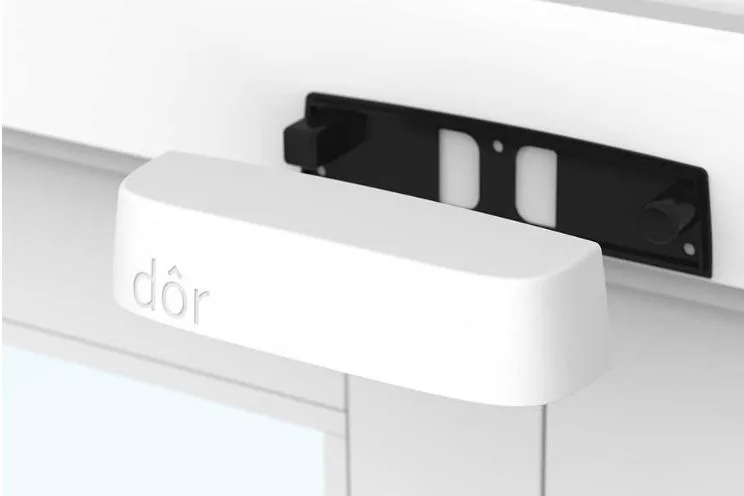
Battery-powered, cellular by default. A store manager mounts the sensor above the door in about five minutes — no activation step and nothing to cable.

V-Count

Ceiling-mounted sensors. The Ultima AI install manual calls for a PoE injector or adaptor (not included), an Ethernet run from switch to sensor, a crimp tool and cable tester, a laser meter for ceiling height, and a laptop for setup. The Nano is simpler (USB-C power, or PoE via a splitter sold separately) but still needs wired Ethernet and the site’s internet. You activate it by emailing V-Count or a reseller.

V-Count markets "plug & play," and for a camera vendor it is. But it’s still a ceiling-and-cabling install with an activation step, not peel-and-stick. Across 50 stores, that difference is a rollout project.

Privacy & demographics

Dor

Thermal sensor. No customer images are captured, processed, or stored, and no face is ever analyzed. A thermal silhouette doesn’t carry the details that make data personal under GDPR Article 4 or the CCPA. So thermal counters usually skip customer-notice obligations. The trade-off: no demographic data, by design.

V-Count

V-Count markets itself as fully GDPR-compliant and takes privacy engineering seriously. Per its privacy materials, Ultima sensors process facial data for age and gender estimation and delete it "instantly," while the Nano AI analyzes depth data on-device with no images stored. Demographic estimation is still a data-protection review item in most places. Plan for a privacy-team sign-off and, usually, a customer-facing notice.

Software & integrations

Dor

A focused dashboard: hourly and daily foot traffic, conversion rate when a POS is connected, and peak-hour and day-of-week heatmaps. Native POS integrations with Shopify (the only counter in Shopify’s certified app program), Square, and Vend / Lightspeed. Once the POS is linked, conversion rate is calculated for you.

V-Count

BoostBI does more: traffic, conversion, occupancy, queue and zone analytics, demographic reporting, a REST API, and a 19-language dashboard. V-Count’s pricing page lists "Shopify & POS integrations" and staff exclusion with every plan. BoostBI can also take in data from other vendors’ sensors, handy if you’re mixing hardware.

If you want one focused number — conversion — calculated next to your POS data, Dor is more direct. If you want a broader analytics platform with demographics, BoostBI does more.

Pricing & billing terms

Dor

Published on Dor’s pricing page: $150 per location per month ($135 billed annually), plus a one-time $300 hardware cost per sensor. Every feature included, no long-term contract required.

V-Count

Also published — credit where due, since it’s rare in this category. V-Count’s pricing page advertises $50 per sensor per month billed annually ($600/year) or $37.50 per month billed every two years ($900), with a Nano AI sensor included and volume bundles for larger orders. Orders of 50+ units go through sales.

On advertised subscription price, V-Count’s per-sensor rate is lower than Dor’s per-location rate. Look at the total, not the sticker: V-Count’s rates require prepaying 1–2 years and a wired install at each door; Dor is month-to-month with a five-minute install and no cabling. Model both across your full rollout.

Who each is built for

Dor

Single-store boutiques through mid-market chains, from one location to several hundred. Best fit: a retailer who wants conversion rate this week, with a privacy story that doesn’t need a legal review.

V-Count

Mid-market to enterprise, often international: 600+ customers in 130+ countries, including 11 Fortune 500 companies, across retail, transportation, healthcare, and smart buildings. Best fit where demographics or occupancy data justify the install and review work.

How to evaluate Dor against V-Count

The same playbook we recommend against any vendor:

  1. Pilot 3–5 stores side by side.

    Mount Dor next to a V-Count sensor for 30 days. Compare the foot traffic counts and conversion rate. Most retailers find the counts match within normal variance.

  2. Decide whether you actually need demographics.

    If age and gender reporting drives real decisions — media buying, assortment — V-Count earns its install. If it’s a dashboard you glance at twice, don’t pay the privacy-review and cabling cost for it.

  3. Connect your POS.

    On Shopify, Square, or Vend / Lightspeed, the Dor integrations connect in minutes and calculate conversion for you.

  4. Compare 3-year totals, not monthly stickers.

    Price both vendors across your full rollout: hardware, subscription terms (prepaid vs. month-to-month), install labor per door, and privacy-review work. The cheaper monthly rate isn’t always the cheaper system.

Book a 20-minute demo and we’ll walk through pilot setup with your store’s real numbers.

See Dor next to your V-Count sensors

The best way to compare two people counters is to run them side by side in one of your stores for a month. We’ll help you set up the pilot and show conversion rate from your real POS data — no cameras, no cabling, no prepaid contract.

Ready to buy? Complete your purchase in just minutes.

Dor thermal people counter mounted above a store door — no cameras, no images
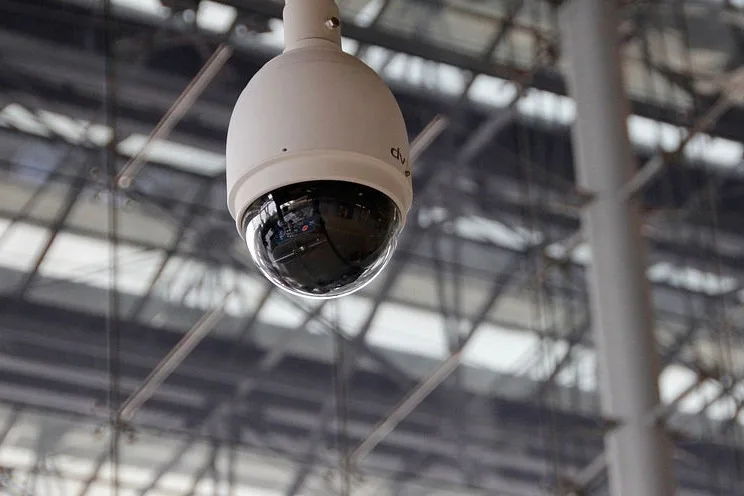
A ceiling-mounted camera counter — the install model V-Count uses and Dor avoids

Frequently asked questions

1

Is Dor a real alternative to V-Count?

If your main need is foot traffic and conversion rate, yes — with a faster install and a simpler privacy story. V-Count does more: age and gender estimation, occupancy and queue analytics, and a multi-sensor BoostBI platform. If you need those, V-Count is the right shortlist. If you need traffic and conversion at the door, Dor covers it without cameras or cabling.

2

How does Dor’s accuracy compare to V-Count?

We don’t publish single-decimal accuracy figures. Both vendors land in about the same range in real stores. Published differences usually come down to the test setup: door type, traffic volume, and how group entries are counted. The honest test is a 30-day side-by-side pilot in one of your own stores.

3

Does V-Count capture images of customers?

Per V-Count’s own materials: Ultima sensors process facial data briefly for age and gender estimation and delete it instantly, with nothing saved; the Nano AI sensor analyzes depth data on-device and stores no identifiable images. Dor’s thermal sensor never analyzes a face, so there’s no facial processing step to review. Which one fits you is a question for your privacy team.

4

Does V-Count publish pricing?

Yes, unusually for this category. V-Count advertises $50 per sensor per month billed annually, or $37.50 per month billed every two years, with the sensor included. Dor is $150 per location per month ($135 billed annually) plus a one-time $300 hardware cost per sensor, with no long-term contract required. Compare total rollout cost, including install labor and billing terms, not just the monthly rate.

5

Will Dor work without Wi-Fi or Ethernet?

Yes. Dor connects over cellular by default, with no network drop and no Power over Ethernet required. Wi-Fi is supported but optional. V-Count sensors connect over wired Ethernet and use the site’s internet to reach V-Count servers.

6

Does V-Count integrate with Shopify?

V-Count lists "Shopify & POS integrations" with its subscription plans. Dor is the only people counter in Shopify’s certified app program and is sold in the Shopify hardware store, with native Square and Vend / Lightspeed integrations as well. Conversion rate is calculated for you once the POS is linked.

7

Who is V-Count?

V-Count is a visitor-analytics company founded in 2006, headquartered in London with offices in Amsterdam, Miami, Dubai, Kuala Lumpur, and Ankara. It serves 600+ customers in 130+ countries, including 11 Fortune 500 companies, across retail, transportation, healthcare, and smart buildings.

About this comparison page

Sources

  1. V-Count, Ultima AI / Nano AI product page; "How People Counters Safeguard Your Personal Data" (facial-data deletion and on-device depth processing claims).
  2. V-Count, Installation guide; Ultima AI quick installation manual; Nano quick installation manual (PoE, Ethernet, USB-C power, activation-by-email requirements).
  3. V-Count, BoostBI product page (platform features, 19 languages, multi-brand sensor compatibility).
  4. V-Count, Demographic analysis — gender & age recognition.
  5. V-Count, pricing page (subscription rates, billing terms, included features, volume bundles).
  6. V-Count, homepage (customer counts, Fortune 500 references, country coverage); Crunchbase profile; CB Insights profile (founding year, offices).

About the author

Written by the Dor Team — the people who build and support Dor’s thermal people counter for retail. Where we make a claim about V-Count we link to the source; where we make a claim about Dor we name the trade-off — including the places above where V-Count’s advertised price is lower. Spot an error? Contact us and we’ll fix it.

Empower your business today

Grow your retail business by understanding your in-store traffic, peak hours, conversion rates and marketing effectiveness.